PBN Content Strategy Framework for Sustainable SEO
Sustainable PBN content strategy: create genuinely useful, non-commercial content across diverse topics and formats on a natural schedule.
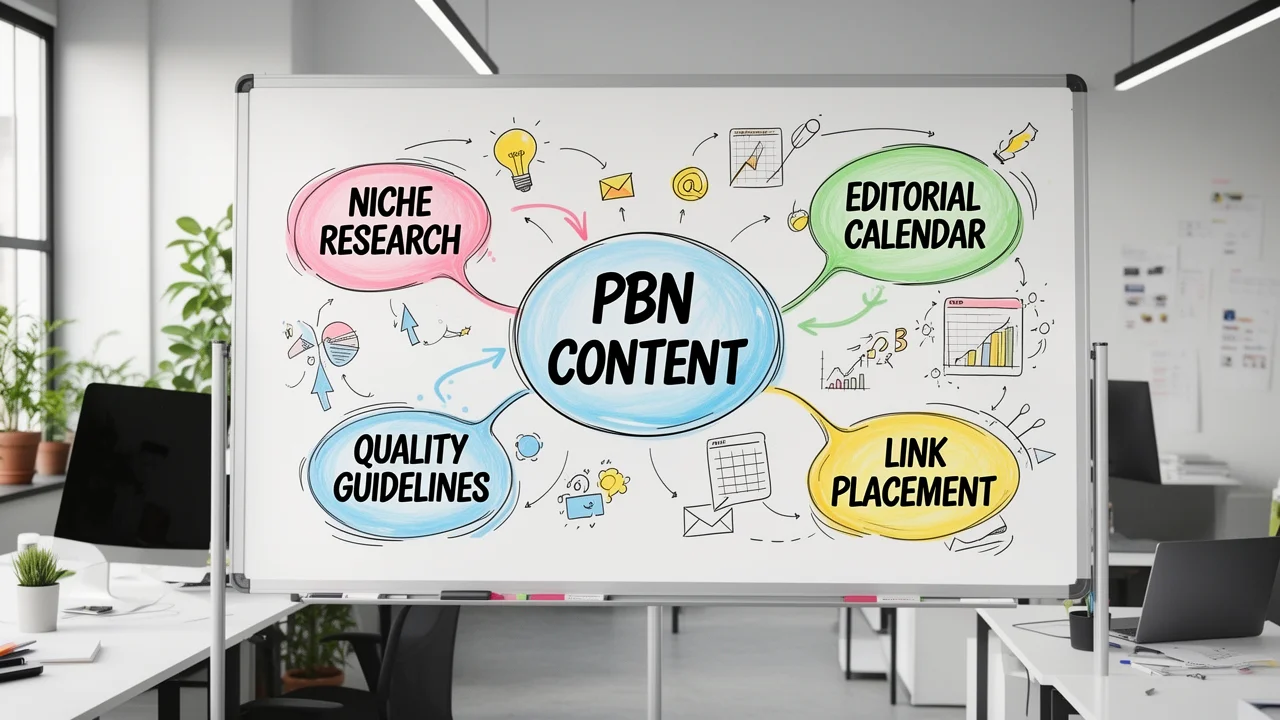
The Philosophy Behind PBN Content
The most common PBN failure point is content. The goal is not to create thinly-veiled link pages, but to build sites that look, feel, and act like legitimate, independent blogs in their niche. Your content strategy must prioritize user value and authenticity over pure keyword targeting. Each site should have a clear, narrow focus and its content should serve a real audience within that niche. This approach not only reduces risk but actually makes the links you place more valuable, as they come from contextually relevant, quality sources. For tools that help manage the deployment of this content, explore solutions like Turbo Subdomains.
Pillar 1: Niche Selection & Site Persona
Every site in your network needs a distinct identity. - Choose Micro-Niches: Instead of ‘health,’ choose ‘home remedies for joint pain’ or ‘yoga for beginners over 50.’ - Define a Persona: Who is this site’s ideal reader? Give them a name, demographics, and problems they need solving. - Commercial Intent: Avoid commercial niches (e.g., ‘best VPN’) for PBN sites. Focus on informational and navigational intent (e.g., ‘how does encryption work?’, ‘guide to online privacy’).
Pillar 2: Content Types & Editorial Mix
A natural blog has a variety of content. Use this mix: - Foundation Articles (50%): In-depth, evergreen guides that comprehensively cover a core topic. - News & Commentary (20%): Short posts commenting on recent industry news or studies. - Listicles & Roundups (15%): ‘5 Tools for…’ or ‘3 Ways to…’ posts. - Personal/Story Content (10%): ‘Why I started this blog’ or case studies (fictionalized). - Multimedia (5%): Simple infographics, image galleries, or embedded relevant videos. This varied approach is a hallmark of a robust content network strategy.
Pillar 3: Content Quality & Uniqueness
Quality is your best defense. - Original Research/Insights: Add unique observations, data, or perspectives to standard topics. - Proper Sourcing: Link out to authoritative external sites (Wikipedia, universities, .gov sites). - Readability: Write for humans. Use short paragraphs, subheadings, and a conversational tone. - Zero Plagiarism: Every piece must pass Copyscape or similar with 100% uniqueness. Paraphrasing is not enough.
Pillar 4: Publishing Cadence & Consistency
A dead blog is a red flag. A frantic posting schedule is another. - Start Slow: Launch a site with 3-5 foundation articles. Then adopt a sustainable pace. - Natural Rhythm: 1-2 posts per month is often more believable than 1-2 per day for a new, small blog. - Use a Calendar: Schedule content in advance to maintain consistency, which is a positive ranking signal. - Avoid Automation Footprints: Don’t publish all network content on the same day/time each week.
Pillar 5: Internal Architecture & Link Placement
How you structure and link within the site matters. - Siloing: Group related content into topic clusters. Link heavily within these clusters. - Natural Link Placement: The link to your money site (or other PBN site) should be contextually relevant and feel like a natural recommendation, not an abrupt insertion. - Anchor Text Diversity: Use branded, URL, and generic anchor text (’learn more,’ ’this website’) for the vast majority of links. Exact-match should be rare (<5%). - No Footprint Links: Never use the same exact anchor text from multiple PBN sites to the same target.
Implementing & Scaling Your Framework
Start with one site as a prototype. Refine your process for research, writing, and publishing. Once the system is smooth, use templates and briefs to scale content creation. Consider using different writers or AI tools (with heavy human editing) for different sites to introduce stylistic variation. The key is a repeatable process that outputs high-quality, varied content. This operational discipline is what defines professional PBN management. Regularly review your content against this PBN SEO audit checklist to ensure it maintains quality and doesn’t develop footprints.
Frequently Asked Questions
Can I use AI to write PBN content?
AI can be a useful tool for ideation and drafting, but it must be heavily edited by a human to add unique insights, correct factual inaccuracies, and instill a natural, non-robotic voice. Publishing raw AI content is a significant risk.
How long should PBN articles be?
Vary length based on the topic. Foundation guides can be 1500-3000 words, while news commentary might be 300-500 words. There's no single ideal length; the content should be as long as it needs to be to cover the topic thoroughly.
Should PBN sites have 'About' and 'Contact' pages?
Absolutely. These pages add crucial legitimacy. Create simple, generic 'About' pages that explain the site's niche focus (without fake bios) and use a contact form (not a direct email that could be traced).
Is it okay for PBN sites to have ads?
In moderation, yes. Placing generic ads (e.g., via Google AdSense) can enhance the appearance of a real blog. However, avoid placing the same ad code network-wide, and never let ads overwhelm the content.