What is PBN Management?
PBN management is the ongoing process of operating a network of interlinked websites (a Private Blog Network) to build authority and pass link equity to a target money site. Unlike one-off link building, it’s a continuous cycle of content creation, link placement, and technical maintenance designed to mimic a natural, independent web of sites. Effective management is what separates a powerful, long-lasting ranking asset from a network that gets detected and devalued by search engines. The core goal is to create a system that appears organic to both users and algorithms.
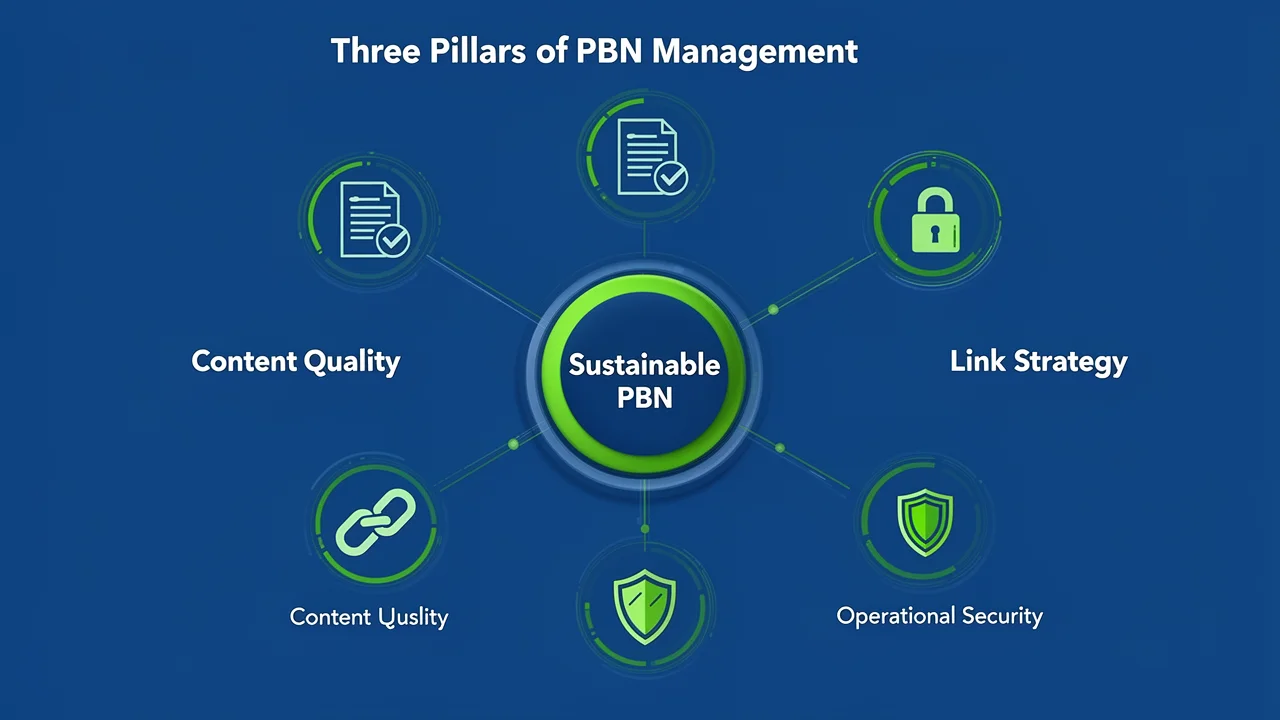
The Three Pillars of Effective PBN Management
Sustainable PBNs are built on three non-negotiable principles. Neglecting any one of them significantly increases the risk of the network being identified and penalized.
1. Content Quality & Uniqueness
Every article published across your PBN must be high-quality, original, and provide genuine value. This is the most critical defense against detection. Search engines use sophisticated algorithms to identify duplicate or spun content. Best practices include:
- Writing for a human audience first, not just for links. * Ensuring content is topic-relevant to the PBN site’s niche. * Maintaining a consistent publishing schedule to simulate a real blog. * Using varied content formats like how-to guides, listicles, and opinion pieces. * Never copying content between your own PBN sites or from other sources.
2. Strategic & Contextual Link Placement
Links from your PBN to your money site(s) must be placed naturally within the content. A sudden influx of exact-match anchor text links from new sites is a major red flag. Effective strategy involves:
- Varying anchor text heavily, using brand names, URLs, partial matches, and generic phrases (“click here,” “learn more”). * Placing links contextually within relevant article body text. * Building a natural link velocity; don’t link from every new PBN post immediately. * Also creating internal links between posts on the same PBN site and occasional outbound links to high-authority, non-competing sites to increase credibility.
3. Operational Security (OpsSec)
This involves obscuring the connections between your PBN sites and between the network and your money site. The goal is to leave no footprints for search engines to follow. Key areas include:
- Diversified Hosting: Use different hosting providers and IP addresses. Avoid hosting all PBN sites on the same server. For scalable solutions, consider our guide on PBN hosting infrastructure. * Separate Registrars & WHOIS Privacy: Register domains with different companies and use privacy protection services. * Unique Analytics & Tracking: Use different Google Analytics/Search Console accounts. * Avoiding Common Templates/Themes: Customize each site’s design to prevent a shared footprint.
Essential PBN Management Tools & Processes
Managing a PBN manually at scale is impractical. Establishing repeatable processes is key.
- Content Calendar: Plan topics, publishing dates, and link placement in advance. * Asset Tracking Spreadsheet: Log every domain, its hosting details, registrar, login credentials, and link placements. * Monitoring Tools: Use tools to track site indexing, backlink profiles, and overall health. * Security Audits: Periodically review your network for technical footprints, like shared IPs or CSS/JavaScript libraries. * Performance Optimization: Fast sites are credible sites. Techniques like using a Cloudflare CDN can significantly boost PBN page speed and user experience.
Common PBN Management Mistakes to Avoid
Many networks fail due to basic operational errors.
- Interlinking PBNs Excessively: Creating a obvious “link wheel” is easily detected. 2. Poor Content: Using AI-generated text without heavy editing, or publishing thin, irrelevant articles. 3. Ignoring Site Maintenance: Failing to update WordPress, plugins, and themes, leaving sites vulnerable and slow. 4. Over-optimization: Stuffing money site links with the same keyword anchor text. 5. Neglecting the “Blog” Aspect: A site with only 3 articles that all link to the same money site looks fake. Build out real content silos.
How Does PBN Management Fit Into a Broader SEO Strategy?
A PBN should be one component of a diversified link profile, not the only component. It provides a high degree of control over anchor text and link placement, which is valuable for competitive niches. However, it should be balanced with other white-hat and gray-hat tactics like guest posting for brand mentions, digital PR, and creating truly viral linkable assets. Think of your PBN as a foundational, owned asset, while other tactics build the natural-looking link ecosystem around it.